
|
NCC Chairman Bobby Greene, testifying on NCC's Central American Free Trade Agreement priorities, met frequently with lawmakers and other decision-makers in Washington, DC, during 2003. |

To ensure its members could optimize their marketing plans for 2003, the NCC made average farm price data and background information on counter-cyclical payments available on its web site. The NCC also communicated with USDA throughout the farm law’s implementation. That included submitting comments on USDA’s proposed rulemaking on the adjusted gross income means test affecting certification for receiving advance 2003 direct and counter-cyclical program payments. Specifically, NCC Chairman Bobby Greene wrote to USDA Secretary Veneman asking her to use her authority to provide an initial advance counter-cyclical payment for the 2003 crop at the maximum allowable rate to boost cash flow and help with production financing.
Defense of the 2002 farm law continued from the previous year. The NCC worked closely with Cotton Belt Congressional members during the budget resolution debate, urging conferees to maintain spending levels consistent with that farm law and not to offer altering provisions. That included signing on to a letter with 71 other agriculture groups urging the Budget Conference Committee not to make spending cuts in agricultural programs. The final budget measure exempted agriculture from cuts.
During the agricultural appropriations process, key NCC activities included a number of action alerts and, prior to consideration on the House floor, 1) the NCC’s letter to House Cotton Belt members from 25 family farmers with the simple yet important message that the current farm law must remain intact and 2) the NCC’s joining 34 organizations on a letter to the Senate and House Appropriations committees’ chairmen urging rejection of altering provisions. Those efforts paid off and the House bill contained no farm bill amendments.
Prior to Senate consideration of the 2004 Agriculture Appropriations Bill, the NCC asked its members to contact their Senators and urge opposition to any amendments to tighten payment limits, eliminate certificate redemptions or modify the cotton provisions of the 2002 farm law.
Earlier in the year, NCC President/CEO Mark Lange’s testimony before a Payment Limit Commission workshop focused on 1) the extraordinary damage to U.S. agriculture and the rural economy that would occur from arbitrary and unwarranted limits that deny farm program benefits eligibility and 2) the role of the certificate program and the marketing loan program’s significance. The Commission later recommended against further restrictions during this farm bill.
The NCC also had to develop a strong response to attacks against the U.S. cotton program from international news media. This included 1) development of a fact sheet for use with Congressional contacts that clearly explained that U.S. agricultural subsidies are not responsible for a world price decline and 2) coordinating foreign journalists’ visits to American cotton farms and NCC offices to ensure the case for U.S. cotton was fairly presented.
NCC continues its close work with USDA and USTR officials on coordinating defense against Brazil’s challenge of the U.S.cotton program.
In other important action during 2003, the NCC:
helped secure a $3.1 billion disaster assistance program that includes: 1) payments for individuals who suffered losses greater than 35 percent in either 2001 or 2002 and 2) $50 million in cottonseed assistance paid on 2002 cottonseed production. That action came after NCC joined a coalition of more than 40 commodity, livestock and specialty crop and agribusiness representatives urging the Administration to approve disaster assistance for 2001 and 2002 crop losses.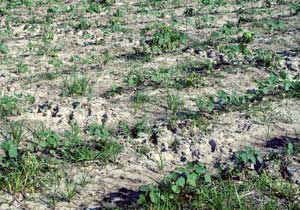
The NCC helped secure a $3.1 billion disaster assistance program that included payments for individuals who suffered losses greater than 35 percent in either 2001 or 2002.
- suggested a number of modifications to what income is considered farming, ranching and forestry income in USDA’s final rule on 2002 farm law implementation that excludes individuals from farm and conservation program payments if the three-year average of their adjusted gross income exceeds $2.5 million.
- filed comments on USDA’s proposal for Trade Adjustment Assistance for Farmers noting the industry’s support but only if the proposal was amended, including assurance that the impact of cotton textile product imports on the price of cotton fiber could be considered in eligibility criteria.
- opposed across-the-board changes by USDA’s Risk Management Agency (RMA) to current methodology for determining bale-by-bale quality losses and subsequent adjustments in production-to-count that would reduce benefits, increase premiums and discourage crop insurance participation. NCC, though, did pledge to work with RMA and the private sector on stimulating development of innovative products after the Federal Crop Insurance Corporation voted not to approve a cotton cost-of-production insurance pilot program.
- joined other agricultural organizations in urging USDA to implement the Conservation Security Program as soon as possible, and worked with the Agricultural Coalition for Immigration Reform on immigration reform legislation for agriculture that would streamline the process of hiring foreign guest workers.
